
Clinton, CT
Pet Ultrasound in Clinton, CT
A Progressive-Practice Approach
We take a progressive-practice approach with ultrasound, something Dr. Price gleaned from her accreditation work with the North American Veterinary Community. Progressive ultrasound means that we use it for everything we can use it for.
Common reasons to ultrasound the abdominal area (internal medicine) are:
- Cancer screening
- Tumors of the liver, spleen or kidneys
- Gallbladder disease
- Bladder stones
- Bladder tumors
- To check for fluid in the abdomen or the chest
- Liver disease
- Kidney disease
- Bladder disease
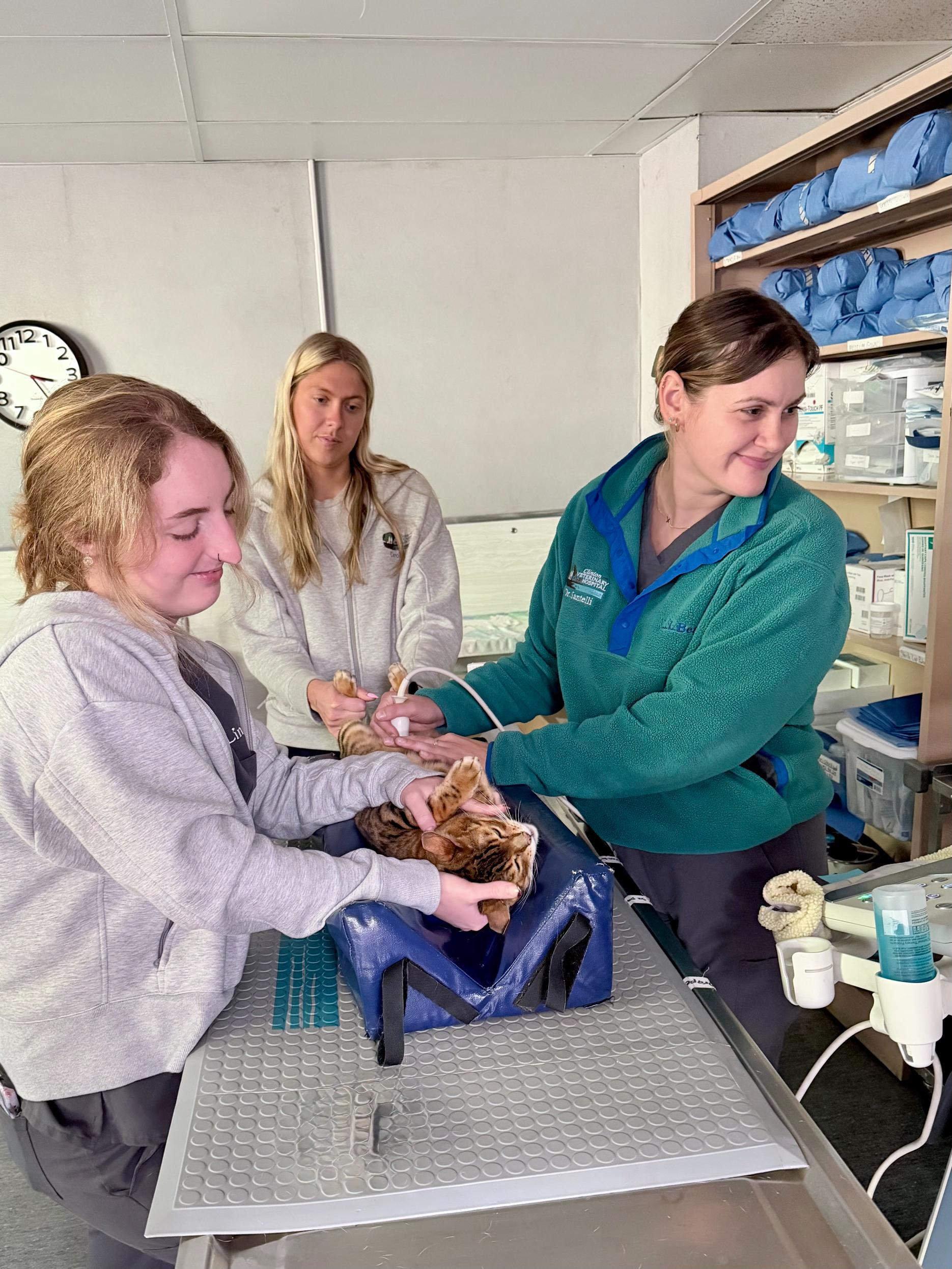
The Diagnostic Effectiveness of Ultrasound
Ultrasound is well known for assessing the health of a fetus, but the technology’s waves can generate precise images of abdominal organs, too.
Because ultrasound images are produced in real-time, this technology can be used to evaluate organ function in addition to structural defects. For instance, ultrasound makes it possible to detect abnormalities in blood flow through the heart and contractions of the heart muscle.
With ultrasounds, diagnosing issues in the heart, liver, spleen, gallbladder, and kidneys become significantly more effective. It is also helpful in diagnosing and determining the stage of some forms of cancer.
Please contact us today for an appointment if you notice your pet behaving oddly or struggling in some way. Our diagnostic approach will make you happy you did.
What to Expect During Your Pet’s Ultrasound at Clinton Veterinary Hospital
At Clinton Veterinary Hospital, we use advanced ultrasound technology to provide a safe, comfortable, and non-invasive way to examine your pet’s internal organs. Ultrasound imaging helps our veterinarians assess the heart, liver, kidneys, bladder, and other soft tissues with exceptional detail—without the need for surgery.
Before the appointment:
We’ll ask you to withhold food for about 12 hours prior to your pet’s ultrasound to ensure the clearest images possible. Water is usually fine unless otherwise instructed.
During the procedure:
Most pets do not require sedation, as the process is gentle and stress-free. Your pet will lie comfortably in a padded trough while the veterinarian glides a small probe over the shaved area of the abdomen or chest. The ultrasound itself is not painful, and many pets relax or even nap during the exam.
After the ultrasound:
Once imaging is complete, your pet can go home right away—ultrasound exams are typically performed on an outpatient basis. Our veterinary team will review the results with you and discuss any next steps or treatment recommendations.
Trust the caring professionals at Clinton Veterinary Hospital to make your pet’s ultrasound experience smooth, comfortable, and informative.